A Timeline of the Parish
The Helen Bridge
A bridge is thrown across the Mooi at Weston — the district's first settlement, grown up at the only passable drift across the river.
St John's, Weston, consecrated
The first church in the district, consecrated on 17 July 1872 by Bishop Macrorie of Pietermaritzburg, within the Parish of Estcourt / Weenen.
The railway arrives
Mooi River station is built on Alexander Lawrence's land — on condition that every train stops — and the centre of district life begins to shift.
St Mary's, Highlands
The Highlands farming community builds its own church on the farm Mount Pleasant, consecrated by Bishop Samuel Baines.
The Parish of Mooi River is born
The old parish is divided, and St John's becomes the first church of the new Parish of Mooi River.
St Andrew's, on the Giant's Castle road
A sandstone church in the style of Sir Herbert Baker is built to serve the farmers west of Mooi River and the scholars of Weenen County College.
St Peter's, Kamberg
A stone church rises under the Drakensberg, consecrated by Bishop Baines — 91 souls attend the first service.
All Saints, Nottingham Road
Built of red brick on ground given by Col E M Greene, consecrated by Bishop Leonard Noel Fisher — and free of debt on the day it was finished.
St Paul's, Mooi River
The growing town at last receives its own church, in traditional English style, designed by local architect Anthony Parker.
St George's, Rosetta
A trust fund begun in 1906 finally bears fruit: the little red-brick church with its bell tower is consecrated by Bishop Fisher.
St Paul's becomes the parish church
As Weston declines and Mooi River grows, the seat of the parish moves from St John's to St Paul's, where the parish office remains today.
All Saints joins the parish
Nottingham Road being closer to Mooi River than to Howick, All Saints is transferred into the Parish of Mooi River.
Five congregations, one family
Worship continues every Sunday at All Saints, St Mary's, St Raphael's and, monthly, at St George's and St Peter's — in English and isiZulu, as one parish.
 St John's, Weston · parish emblem
The Church of St John, Weston
Weston came before Mooi River. The district's first settlement grew up at the only passable drift across the Mooi, and the Helen Bridge was built there as a matter of urgency in 1866. Six years later the area received its first church: St John's, a quaint brick building by a noted English ecclesiastical architect, consecrated on 17 July 1872 by the Bishop of Pietermaritzburg, the Right Reverend William Kenneth Macrorie, within the Parish of Estcourt / Weenen. It still stands on the Greytown road at the Helen Bridge, just before Weston Agricultural College.
St John's was soon drawn into history. It was fortified during the Langalibalele rebellion of 1873 to shelter women and children, and again during the troubles of 1879. Its first rector was a famous and courageous figure: the Revd George Smith, who as chaplain at Rorke's Drift urged the defenders to "praise the Lord and pass the ammunition" — earning the nickname "Ammunition Smith". A stained-glass window in the church remembers him. Local lore adds that Edward Way had his third daughter baptised at St John's while he and his wife stood on ammunition boxes.
The trees in the churchyard were planted by parishioners on the first Arbor Day in 1876. The striking lych-gate — since relocated to St Paul's — was raised in 1914 in memory of Harriet Julia Turner; and at the vestry meeting the following year, women communicants were admitted for the first time, permitted both to speak and to vote. During the Anglo-Boer War, Weston served as the British remount depot, with a tented hospital of 1,500 beds; some soldiers were buried at St John's, and the military cemetery on the hill above remains a place of historical pilgrimage.
In 1906 the old parish was divided, and St John's became the first church of the new Parish of Mooi River. But the railway of 1884 had already begun to draw life two kilometres upstream, and as Mooi River grew, Weston waned. In 1952 the seat of the parish passed to St Paul's, and St John's — no longer in regular use for services — is held today in caretaker status, the quiet mother church of us all.
 St Mary's · parish emblem
St Mary's — Highlands & Bruntville
Just after the Anglo-Boer War, the farming families of Highlands — the district straddling the road between Mooi River and Middelrus — decided the weekly Sunday journey to St John's had become too demanding, and built a church of their own on the farm Mount Pleasant. Modest in size at some 90 square metres and built for £800, St Mary's was consecrated in October 1903 by the Bishop of Natal, the Right Reverend Samuel Baines.
In May 1905 a blizzard struck the district: St Mary's doors were blown open, the nave filled with more than two metres of snow, and the east wall collapsed. Astonishingly, parishioners repaired the damage in record time — services resumed that August.
St Mary's served its community until 1940, when, the congregation having steadily declined, it was closed. The property was sold to a private farmer — some graves remain there still, and the font was given to a church in Greytown. But St Mary's lives on through its namesake: St Mary's in Bruntville, erected largely with building materials salvaged from the first church. There the congregation gathers to this day, a living link with more than a century of Anglican worship in the district.
St Andrew's, west of Mooi River
One of the most beautiful churches of the Midlands, St Andrew's was built in 1906 to serve the Anglican farmers west of Mooi River, together with the scholars and staff of Weenen County College, which had moved to a nearby site on the Giant's Castle road in 1901. Built in the style of the legendary Sir Herbert Baker, the church echoes a church in Kent — the birthplace of Percy Simmons, a prominent local farmer and a central figure in its building.
It stands on two acres given by John Evan Oates. The sandstone was laid over two years by a Mr Nelson and his sons of Hlatikulu, and the woodwork was the handiwork of Mr J D Owen, the carpentry instructor at Weenen County College. The round stained-glass window above the altar was added in 1907 in memory of Mr and Mrs Thompson of the College, both closely associated with the church-building effort.
St Andrew's has since passed out of the parish's hands and was sold into private ownership. The churchyard, however, remains: the graves are still there, and may be visited by families and friends of those who rest in this beautiful corner beneath the Berg.
 St Peter's, Kamberg · parish emblem
St Peter's, Kamberg
Like so many rural churches of Natal, St Peter's — in a remote corner of the Midlands under the shadow of the Drakensberg — was born of the determination of local farming families, long used to worshipping in one another's homes, to have a proper place of prayer. It was built on farmland given by Henry Lang, who himself played a major part in its construction; the building materials were carted all the way from Rosetta siding by Arthur Ratsey. Built of stone under an iron roof and funded entirely by local donations, it remains one of the most attractive rustic churches in the traditional English style.
The small graveyard records the names of many of its donors. Its most poignant memorial belongs to the Hamilton family: Mary, ten months old, buried in August 1911; Barbara, thirty months, in April 1912; Noel, six months, in June 1912; Jeannie, seven months, in June 1916; and Natalie, only three, in January 1918. No church records of the Hamiltons survive — their lives and their sorrows remain a mystery.
St Peter's was consecrated in 1907 by Bishop Baines, evidently a tireless traveller of the Midlands. The strength of the young congregation may be judged from the 91 souls who attended the first of its monthly services — a rhythm the church keeps still, with the Eucharist celebrated on the last Sunday of each month.
 All Saints, Nottingham Road · parish emblem
All Saints, Nottingham Road
Until 1931, Anglicans at Nottingham Road worshipped in local halls and in one another's homes — workable, but unsatisfactory, and the community sorely needed a consecrated burial ground. All Saints was built that year at the corner of the R103 and the Loteni Road, on ground donated by Col E M Greene of Spring Grove. Raised in red brick and tile from funds given and gathered by parishioners, it was — remarkably — entirely free of debt on the day it was completed.
The church was consecrated at the end of 1931 by the Bishop of Natal, Leonard Noel Fisher — brother of the Archbishop of Canterbury — as part of the Howick parish. But Nottingham Road lies closer to Mooi River than to Howick, and in 1962 All Saints was transferred into the Parish of Mooi River, where it has been a mainstay ever since. The hall beside the church was added in 2008. Today All Saints keeps the fullest calendar in the parish: the Eucharist every Sunday at 9 am, with a Family Service on the third Sunday of the month — and the parish office sits here each Wednesday.
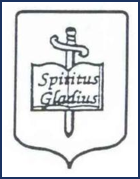 St Paul's, Mooi River · parish emblem
St Paul's, Mooi River
St Paul's story begins with the railway. When the line reached the district in 1884, the engineers bridged the Mooi two kilometres upstream of Weston and St John's, and the new station was built on ground bought from a well-known local Anglican, Alexander Lawrence — who made it a condition of sale that every train would stop there. The effect was immediate: farming and commerce shifted swiftly to the new hub, first named Lawrenceville, later taking the name Mooi River.
By the turn of the century the growing town was holding services in the "Church Institute", a building — complete with a small porch and a humble belfry — on the site of today's Roadside Service Station. It served until 1938, when the new main road made the plot ideal for a service station and it was sold to David Nicol for £1,200; the last service there was held on 6 November 1938. For the next three years the congregation worshipped in the Grantleigh Hotel.
A founding committee invited designs from Anthony Parker, a local architect and son of a prominent Mooi River doctor. Of the two designs he submitted, the committee chose in 1939 the traditional English style still in use. Built by W E Swale at a cost of £2,600, St Paul's was consecrated in 1941 by Bishop Noel Fisher, with the Revd Alston Geils as rector, 237 parishioners packed inside, and an offertory of more than £26. The first baptism was that of Owen Sinclair.
The stone pulpit has a story of its own. It stood originally in St Cyprian's, Durban; when that church was demolished, the pulpit ended up in a builder's scrapyard in Greytown — where the Revd Alston Geils discovered it, rounded up some helpers, and brought it home to St Paul's.
As Mooi River grew and Weston declined, St Paul's was made the parish church in 1952, as it remains. The Terence Duggan Hall, named for a prominent parishioner, was dedicated in 1990. Today St Paul's is home to the parish office, though regular services are no longer held here.
(replace this placeholder)
St George's, Rosetta
Like most of the Anglican churches of rural Natal, St George's owes its existence to the faith and generosity of the local farming community — but its road was longer than most. Its origins lie in 1906, when the mother of Col Bede Crompton, by all accounts a staunch Anglican from England, launched a trust fund to gather the money for a church at Rosetta. The Colonel's wife left a legacy; others gave gifts; and then, for reasons no one now remembers, the project simply stalled — the trust lying idle for forty years, quietly collecting interest.
In 1945, with capital and interest grown to more than £800, the idea was revived. A local property developer donated suitable ground, and a new generation of parishioners reactivated the fund and raised what more was needed. The work took on fresh urgency in 1948, when a young boy, Georgie Lang — son of the local postmistress — died and had to be buried far away at Kamberg, there being no cemetery at Rosetta.
St George's was consecrated in 1949 by the Lord Bishop of Natal, Leonard Noel Fisher. A quaint little red-brick church with its bell tower, it was originally thatched, the roof later replaced with tiles. The congregation gathers here on the first Sunday of every month at 10 am for Morning Prayer or the Eucharist.
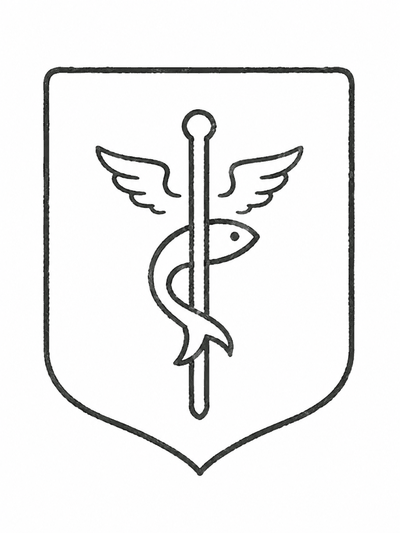 St Raphael's, Zenzane Village · parish emblem
St Raphael's, Zenzane
The youngest of our worshipping communities, St Raphael's gathers every Sunday at 11 am in Zenzane Village near Michaelhouse in the Balgowan district, alternating Morning Prayer and the Eucharist week by week. It is one of the liveliest congregations in the parish today.
The story of St Raphael's founding was never written down on the parish's old website, and we would dearly love to record it. If you helped build this community, or remember its early days, please share your memories with the parish office so the story can be told here.